

By Tony Chalhoub, founder of CarpetAce
Short answer: Carpet beetle larvae feed on wool and other animal fibres, usually in dark, undisturbed spots along the skirting, under furniture and inside robes. Vacuum those areas thoroughly and often, wash or freeze affected items, store woollens clean and sealed, and call a licensed pest controller for an established infestation. Once the pests are treated, carpet that’s been badly eaten is best replaced.
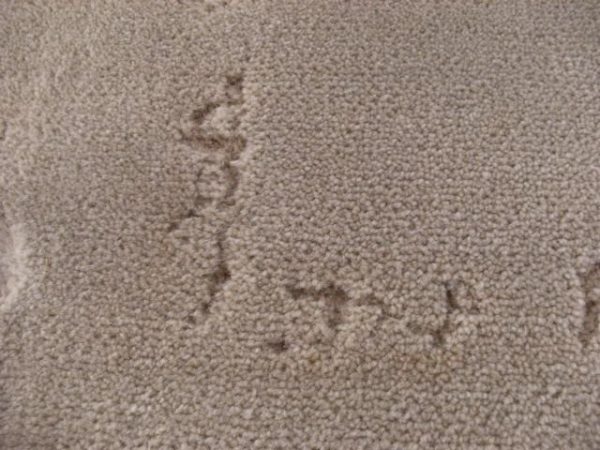
As an installer, I see carpet beetle damage most often when we lift old wool carpet: bare tracks along the skirting, a patch under a bookcase that hasn’t moved in years, or the floor of a built-in robe. The beetles don’t bite and they’re easy to miss, so the damage is often well advanced before anyone notices. Here’s how to recognise them, keep them out and deal with them. We don’t do pest control, so for an infestation we always suggest a licensed pest controller.
What do carpet beetles look like?
You’re more likely to see the larvae, or their shed skins, than the adults.
- Adults are tiny, about 2–4 mm, and round to oval. The Australian carpet beetle is dark with pale wavy bands across its back; the varied carpet beetle is mottled with white, brown and yellow scales.
- Larvae are the ones that do the damage. They’re small, brown and covered in bristles, often called woolly bears, and grow to about 5 mm.
- Shed skins look like empty, light-brown larvae. Larvae moult several times, so finding skins is a strong sign they’re feeding nearby.

Why do these beetles like to live in wool carpets?
Carpet beetle larvae feed on keratin, the protein in animal fibres. Wool carpet and rugs are a large, steady food supply, and the larvae also eat fur, feathers, silk, leather and felt, plus lint, hair and dead insects.
They feed where it’s dark and they won’t be disturbed: along the edges of the room where the vacuum doesn’t reach, under heavy furniture, in robes and under rugs. Synthetic fibres aren’t food for them, though larvae can still chew through blends or soiled fibres to get to something they can eat, and they’ll happily live on the lint and hair in a synthetic carpet next to a wool rug. For more on how they compare with clothes moths and silverfish, see our guide to carpet and fabric pests.
Looking for the signs of infestation and damage
- Irregular bare or thinning patches in the pile, usually in sheltered spots: along the skirting, under furniture and in robes. Clothes moths, by contrast, tend to leave silky webbing or tubes.
- Shed larval skins near the damage.
- Tiny droppings, like fine sand, often the same colour as the fibre that’s been eaten.
- Adult beetles on windowsills in spring and early summer, trying to get outside to the flowers.
Main pest season
Carpet beetles are a year-round problem indoors. Adults appear in spring and early summer, fly to windows and lay their eggs back inside wherever there’s food. The larvae then feed for months. Depending on warmth and food, the full life cycle can take from a few months to more than a year, and most of that time is spent eating.
How do you prevent carpet beetles?
- Vacuum thoroughly, not just quickly. Use the crevice tool along the skirting, and get under beds, sofas and heavy furniture and into robes. Empty the vacuum into an outside bin.
- Move heavy furniture a couple of times a year and check the carpet underneath.
- Store woollens clean and sealed. Wash or dry-clean them first, then use airtight bags or containers.
- Check cut flowers before bringing them inside; adults often ride in on them.
- Fit fly screens to windows and doors that are often open.
- Remove old bird nests and dead insects from eaves and roof spaces, where beetles can breed before moving indoors.
- Check second-hand rugs and furniture before they come into the house.
How do you get rid of carpet beetles?
If you’ve caught it early, with a few larvae in one spot, a do-it-yourself approach can work:
- Vacuum the affected area and the whole room thoroughly every few days for several weeks, because eggs keep hatching.
- Wash affected clothing and textiles at the hottest temperature the care label allows.
- Seal small items that can’t be washed in a bag and freeze them for a week or two, which kills eggs and larvae.
- Find and remove the source, such as an old wool rug, a stored box of blankets or a bird nest in the roof.
If the damage is spread through the house, or it keeps coming back, call a licensed pest controller. They can identify the species, find the source and treat with products registered for the job. I’d avoid spraying household insecticides on wool carpet yourself.
CarpetAce recommends and uses A1 Pest & Weed Control for carpet beetle treatment and other pests.
If you’re replacing carpet after an infestation, have it treated first, and tell us at the measure. When the old carpet comes up, the edges and gripper strips are where larvae hide, so that’s the time to vacuum the bare floor thoroughly before anything new goes down.
The main facts about carpet beetles
- They’re found throughout Australia, including inland areas.
- Only the larvae damage carpet; adults feed on pollen and nectar outdoors.
- Larvae eat wool, fur, felt, silk, feathers and leather, but can’t live on synthetic fibres alone.
- They don’t bite, though in some people the larvae’s bristles can cause an itchy skin rash.
- Prevention comes down to thorough vacuuming, sealed storage and removing what they feed on.
Replacing carpet damaged by carpet beetles
We don’t patch or repair carpet. If the damage is limited to a robe floor or behind a bookcase, many people live with it. Where it’s in open areas or spread through the house, replacing the carpet once the infestation has been treated is the lasting fix.
If you’ve had beetles before, the fibre matters. Many wool carpets are given an insect-resist treatment when they’re made, so ask about it when you choose. A synthetic such as solution-dyed nylon isn’t food for the larvae at all. Mid-range solution-dyed nylon is $43.50/m² and mid-range wool is $68.30/m², supply only, including GST. Our guide to wool vs nylon carpet compares the two.
Frequently asked questions
Do carpet beetles bite?
No. They don’t bite or sting, but the larvae’s bristles can irritate sensitive skin. If you have an unexplained itchy rash and find larvae, mention it to your doctor.
Can carpet beetles live in synthetic carpet?
They can’t feed on synthetic fibres alone, but they can live on the hair, lint and crumbs in any carpet, and move on to wool rugs, blankets and clothing nearby.
How long does it take to get rid of carpet beetles?
Usually weeks, not days. Eggs keep hatching after the first clean-up, so keep vacuuming thoroughly for at least a month and watch for new larvae or adults at the windows.
Should I replace carpet that has carpet beetles?
Treat the infestation first. Replacing the carpet alone won’t solve it if they’re living in rugs, robes or the roof space. Once it’s treated, replace carpet that’s visibly damaged.
Book a free measure and quote
We’ll bring samples to your home, measure every room and email a written quote within 24 hours of the measure. Book your free measure and quote or call 0425 552 816.